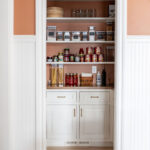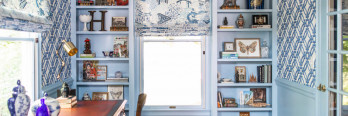

A thoughtfully designed butler’s pantry transforms the way a kitchen functions. More than just extra storage, it becomes a hardworking extension of the kitchen—providing space for preparation, entertaining, and organization while keeping the main kitchen visually clean.
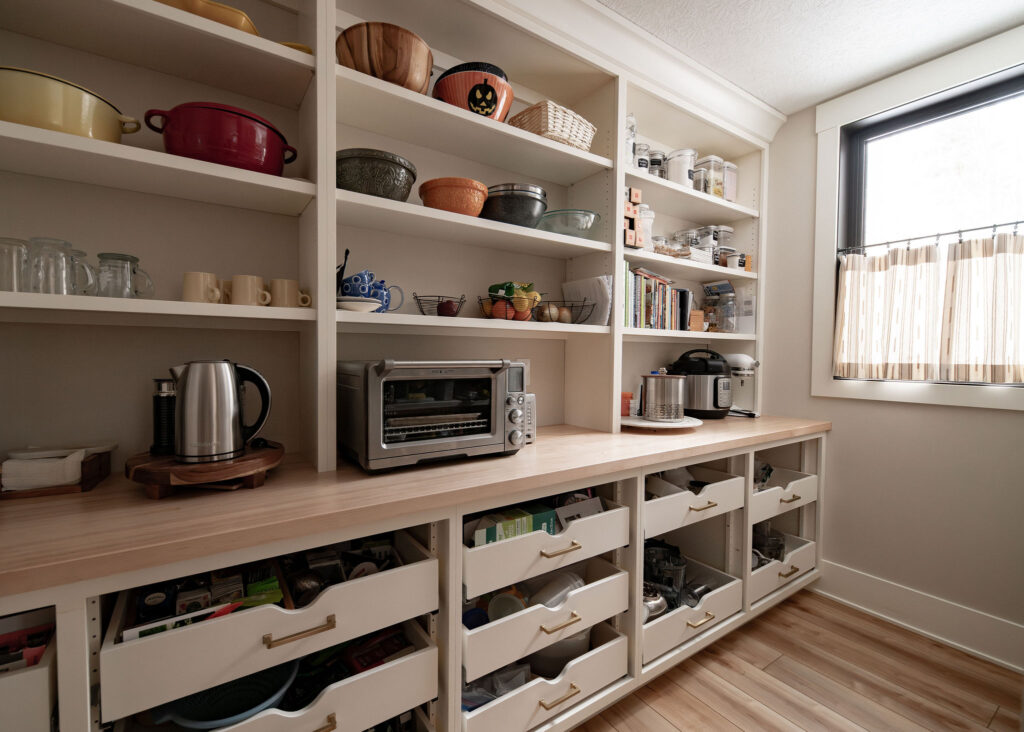
In many homes, the butler’s pantry acts as a hidden work zone. Small appliances, cookware, and entertaining essentials live here, allowing the main kitchen to remain uncluttered and guest-ready. The spaces shown here illustrate how intentional design decisions—layered storage, functional layouts, and beautiful finishes—can elevate a pantry from simple storage to an indispensable part of the home.
Below are several design strategies to consider when creating an in-home butler’s pantry.
Layer Storage for Maximum Organization
One of the most effective elements of a butler’s pantry is layered storage. Instead of relying solely on cabinets, combining multiple storage types creates flexibility and visual interest.
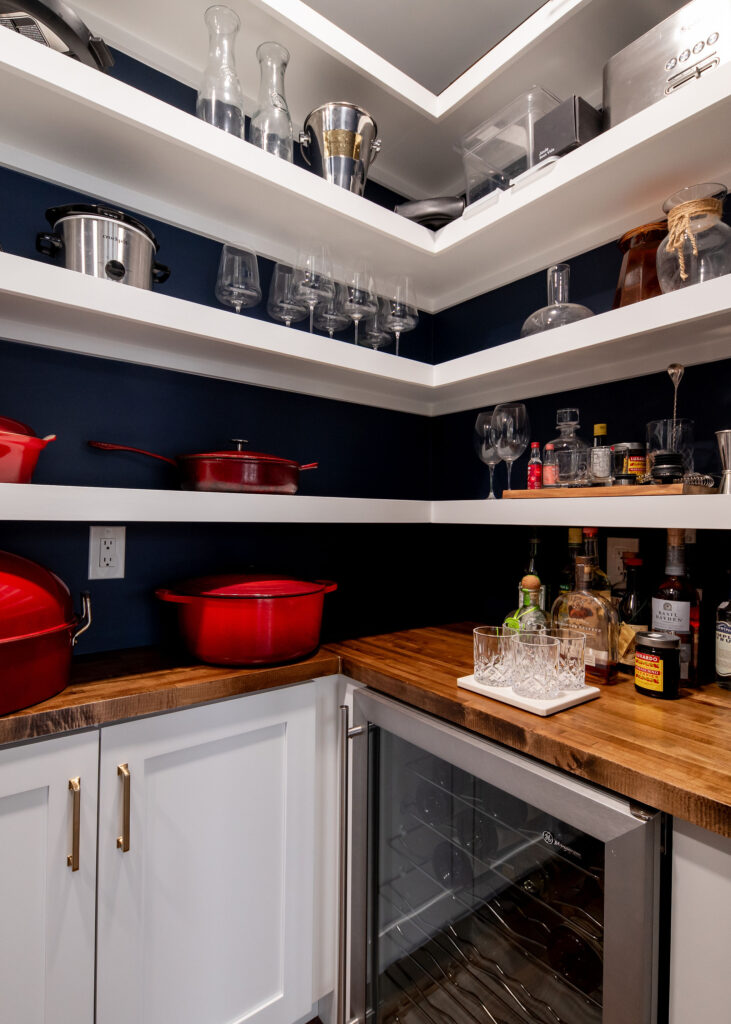
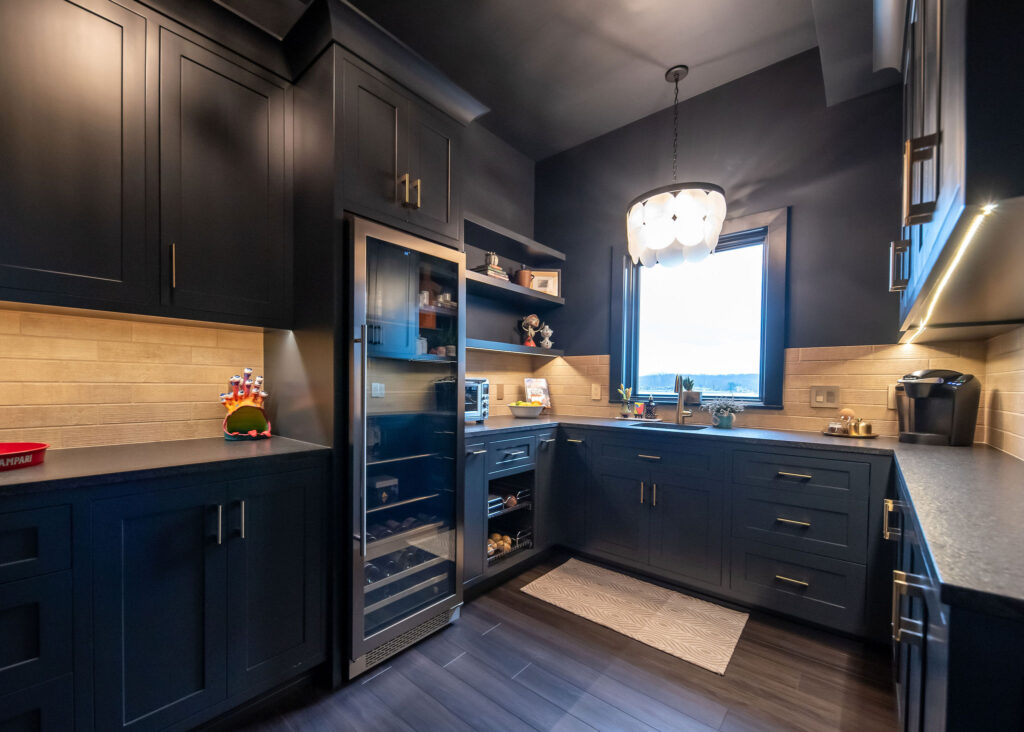
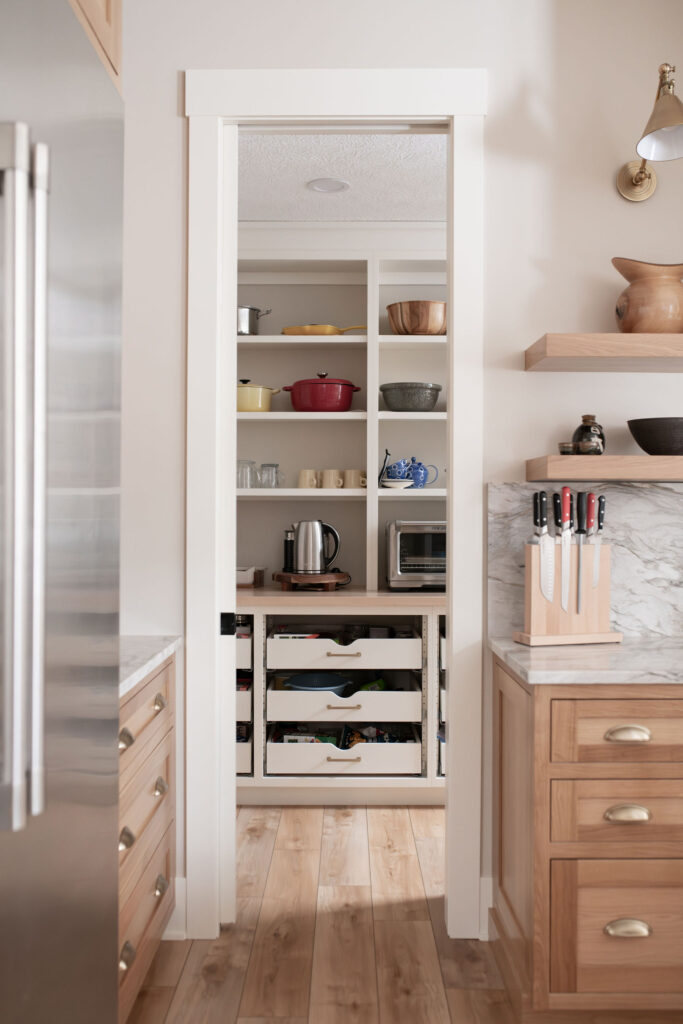
Key storage elements include:
Open shelving
Open shelves keep everyday items accessible and allow beautiful cookware or serving pieces to become part of the design. Stacked bowls, glassware, and Dutch ovens add color and personality.
Deep drawers
Wide drawers are ideal for storing pantry items, kitchen tools, and serving pieces. They provide visibility and easy access—far more practical than deep cabinets where items get lost in the back.
Lower cabinetry
Closed cabinets hide bulk storage, appliances, or less frequently used items while keeping the space tidy.
Counter workspace
A generous countertop creates room for prep work or appliance use while tying the cabinetry together visually.
This layered approach creates a pantry that feels organized, efficient, and visually balanced.
Create a Distinct Design Moment
Because a butler’s pantry often sits just beyond the kitchen, it provides the perfect opportunity to introduce a slightly bolder design moment.
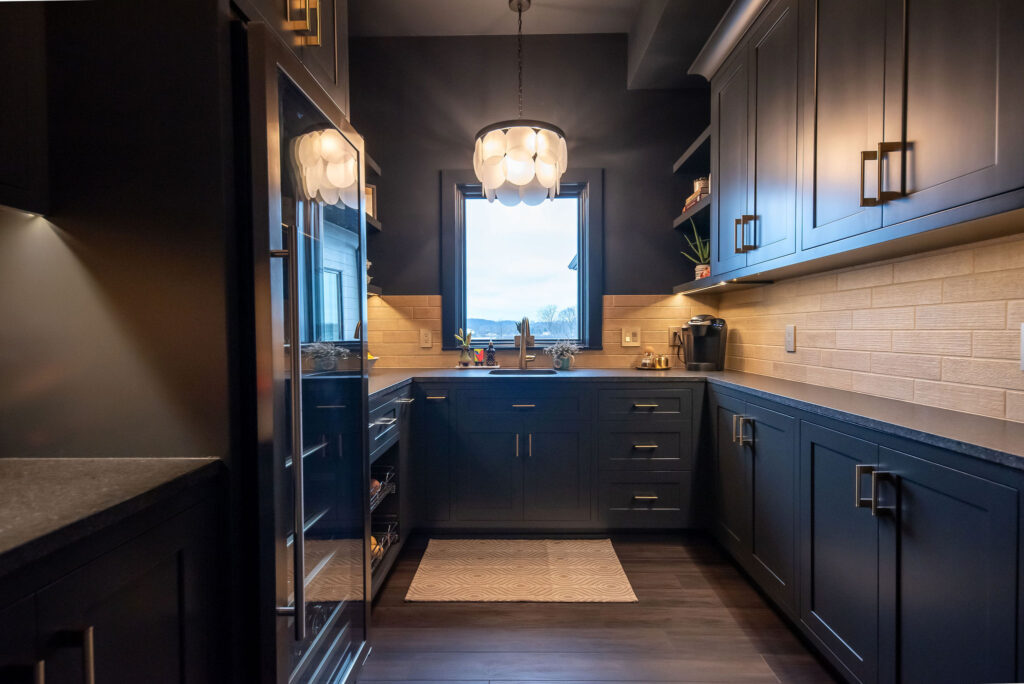
Since the space is smaller and often tucked away, homeowners can embrace more dramatic finishes without overwhelming the main kitchen.
Incorporate Smart Appliances
A modern butler’s pantry often includes appliances that support both everyday living and entertaining.
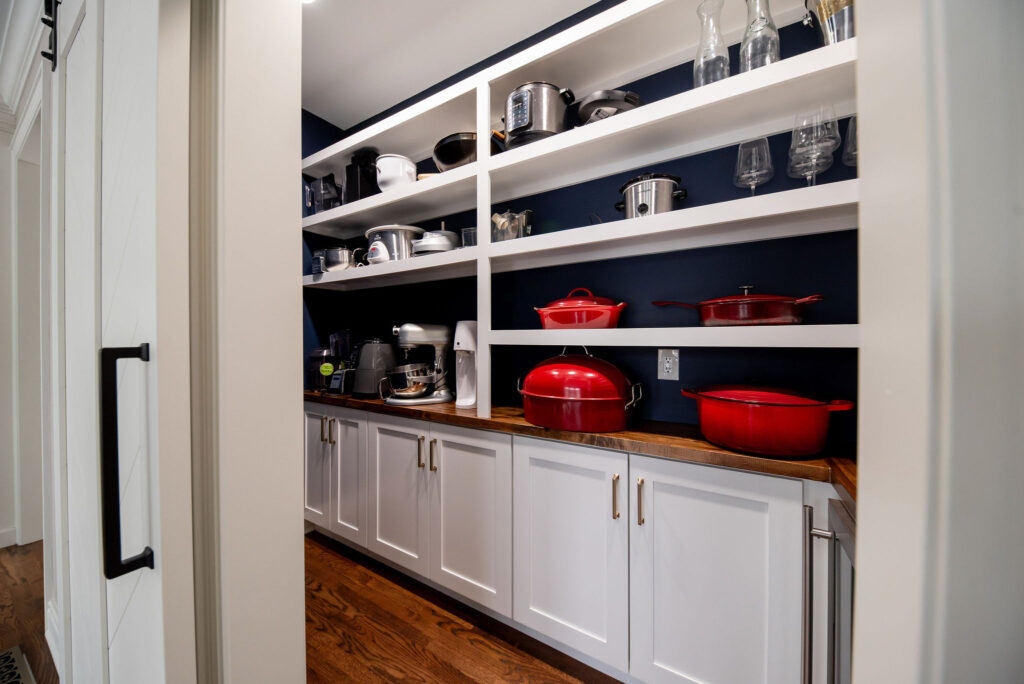
Popular choices include:
- Wine refrigerators for beverage storage
- Microwaves or toaster ovens for quick cooking
- Coffee or espresso stations
- Ice makers or beverage drawers
- Stand mixers and baking stations
By relocating these appliances into the pantry, the main kitchen remains streamlined while the pantry becomes a functional prep and serving zone.
Consider the Entry: Doors and Transitions
How a pantry connects to the kitchen can dramatically influence the overall design.
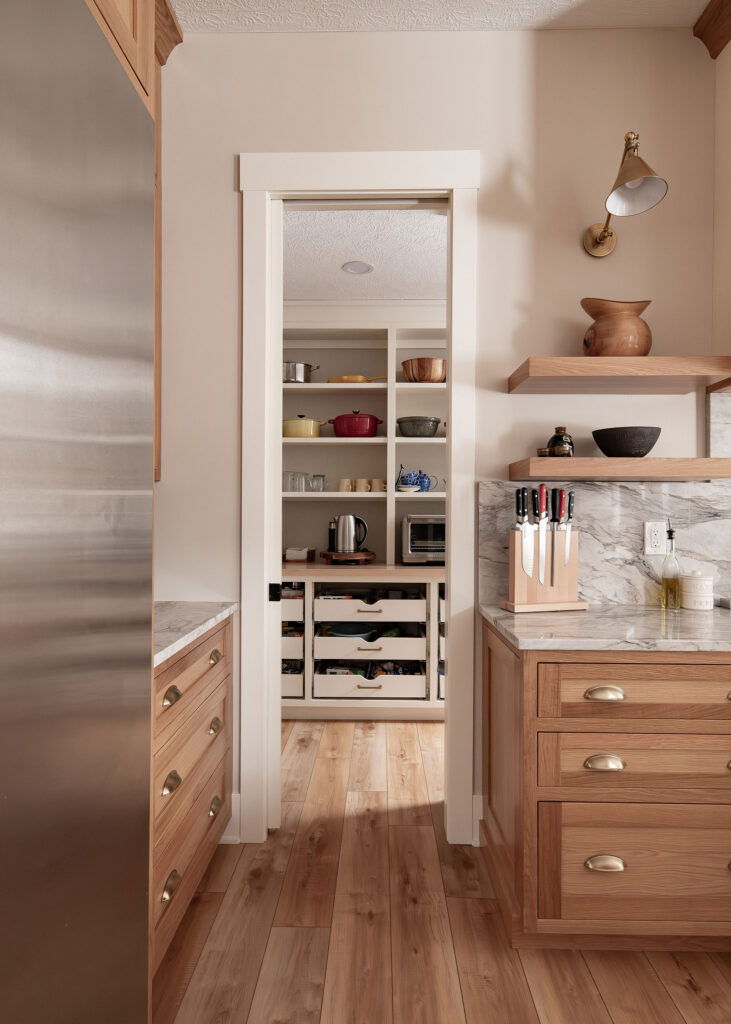
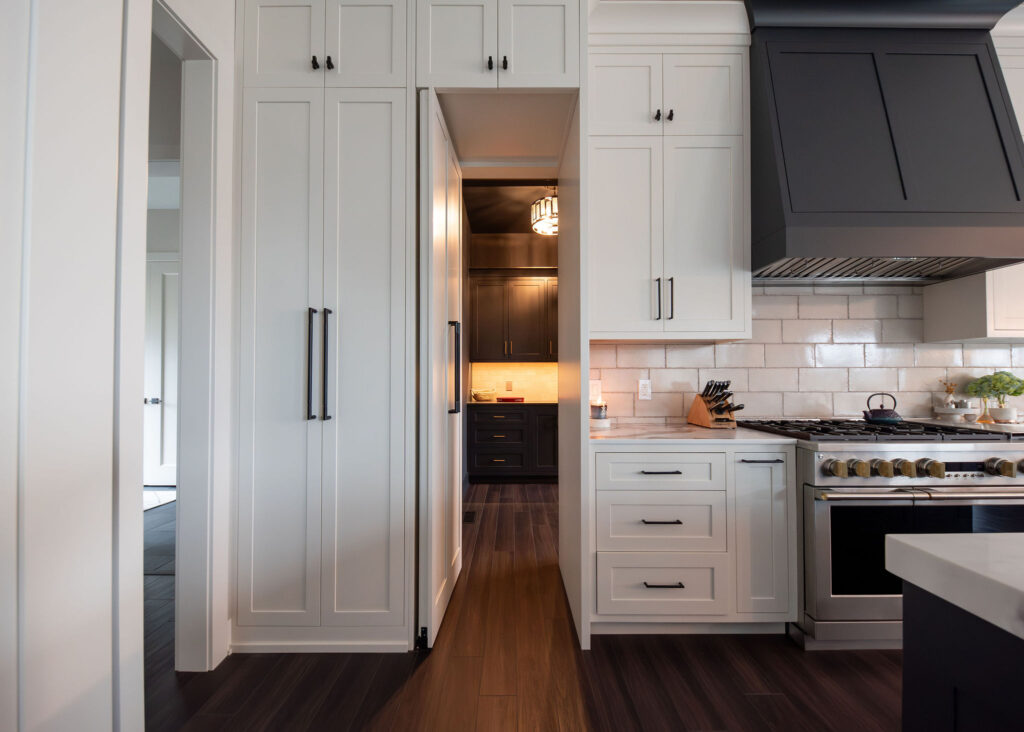
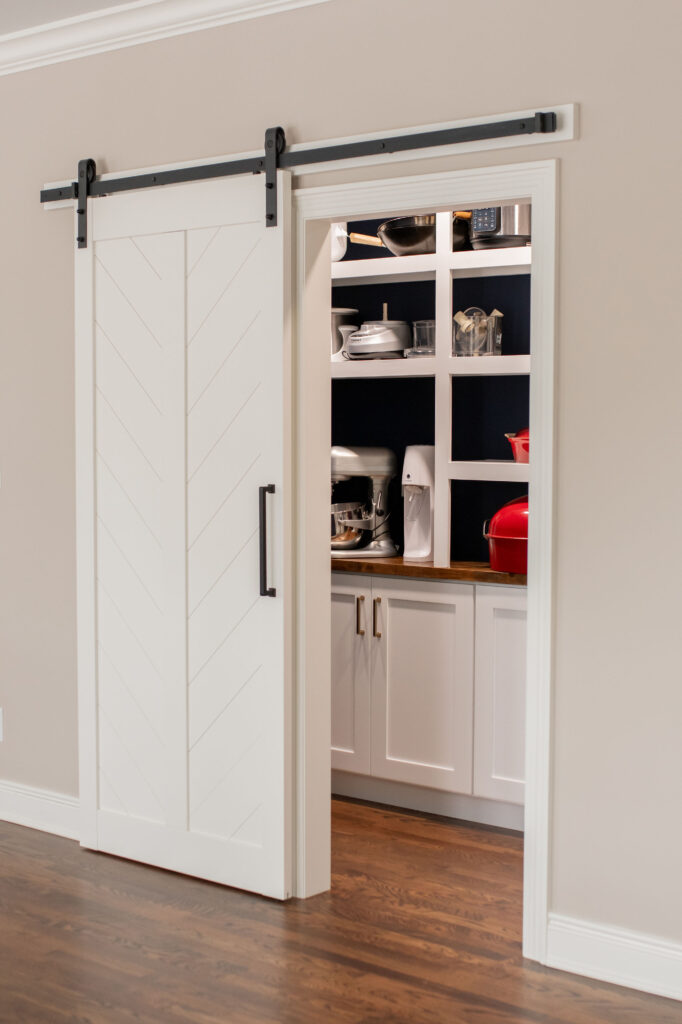
Common entry solutions include:
Hidden cabinet doors
Pantries can be concealed within tall cabinetry, maintaining a seamless kitchen wall.
Barn doors or sliding doors
These add architectural interest while saving space.
Open walk-through entries
A simple doorway creates a natural extension of the kitchen and encourages easy flow during cooking or entertaining.
In many homes, the pantry becomes a surprise design moment, revealed as you pass through the kitchen.
The Butler’s Pantry: Where Beauty Meets Function
A well-designed butler’s pantry blends efficiency, organization, and style. By layering storage, incorporating appliances, and selecting thoughtful finishes, the space becomes far more than a secondary kitchen—it becomes a hardworking hub for everyday living and entertaining.
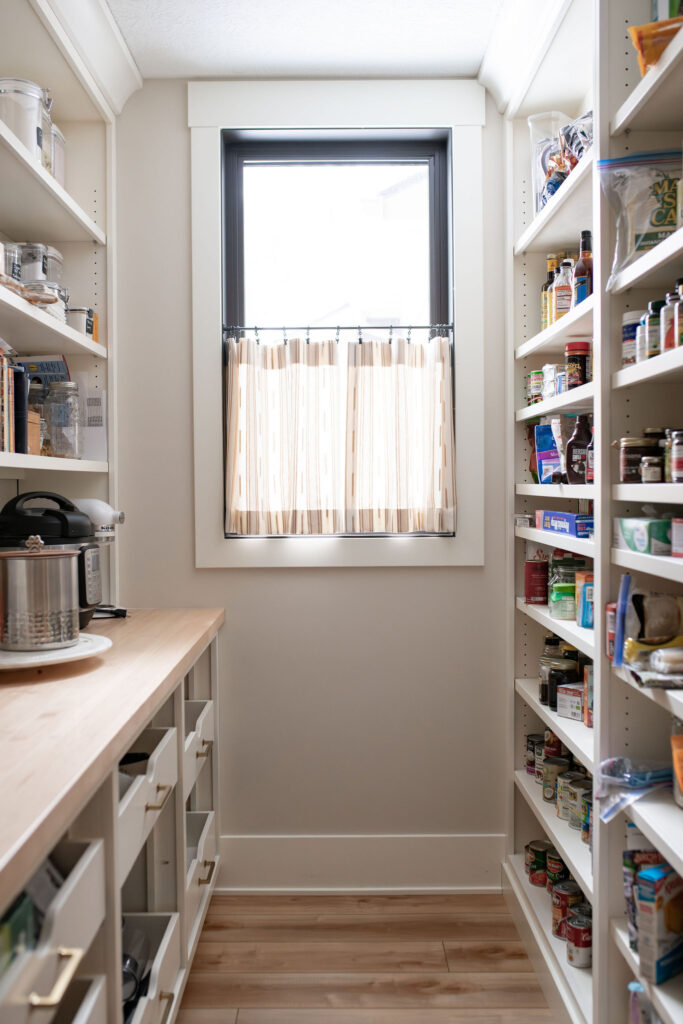
Whether designed as a bright extension of the kitchen or a moody hidden retreat, a butler’s pantry offers homeowners the luxury of extra function without sacrificing beauty.
At Lindsey Putzier Design Studio, we approach each pantry with the same care as the kitchen itself—crafting spaces that support how our clients cook, host, and live.
Interested in reimagining your pantry? Set up a Discovery Call with Lindsey!